 Agip Arzaki Maulana
Rainflow Queue, a peer-to-peer queue
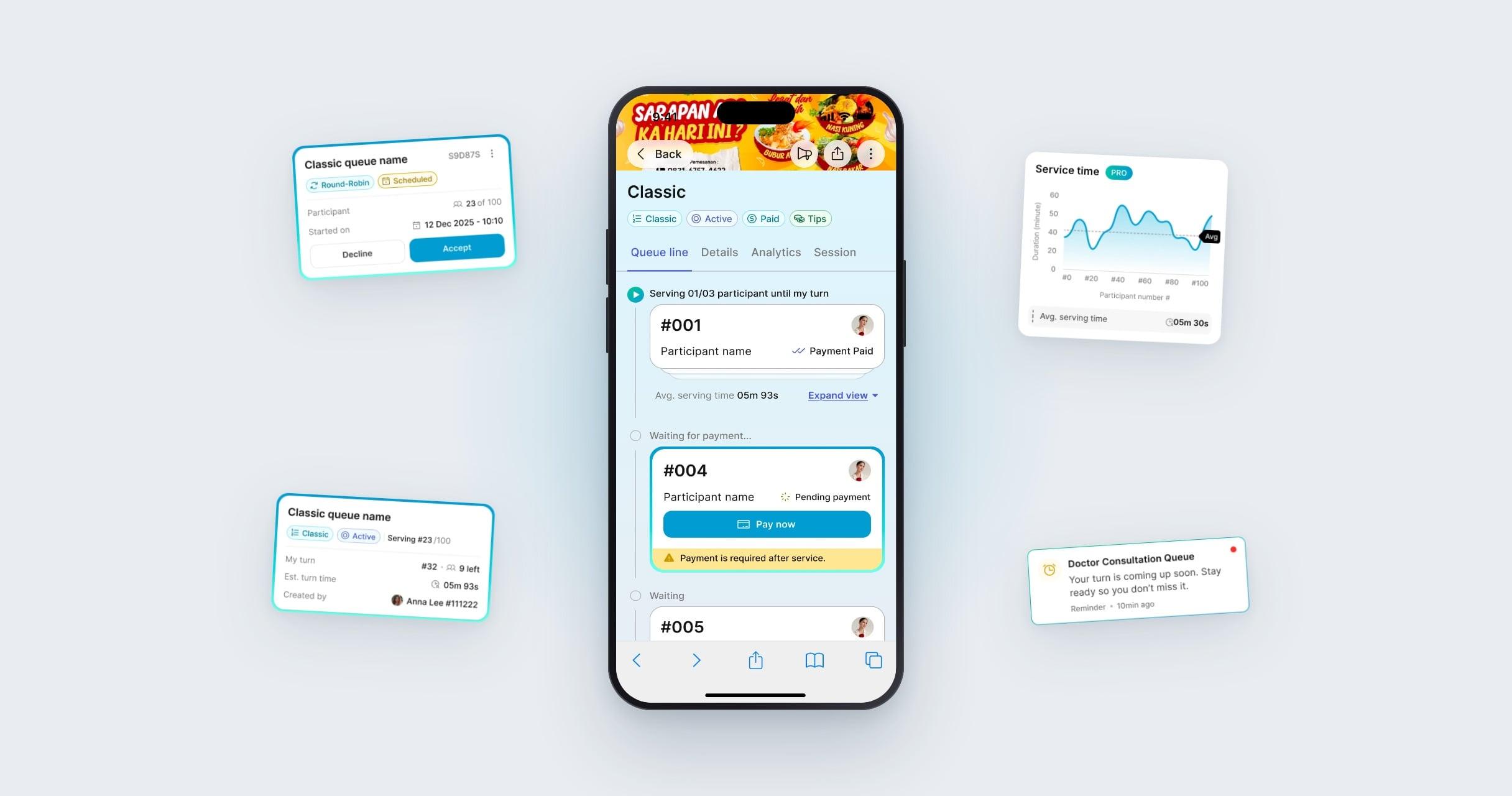
Lines still live on paper, in group chats and in crowds at the door. I designed Rainflow so anyone can create a queue, share it with a QR code or link, and run it live, across three queue types: Classic, Round-Robin and Auction.
- Role
- Product Designer - end-to-end UX and UI
- Company
- Rainflow
Overview
What is Rainflow
A C2C queue platform where every user can be a Creator and a Participant. Creators set up a line in seconds, manage it in real time, and can earn from it through paid queues, tips and Pro plans.
Three ways to queue
Classic is first-come or highest-tip first-serve, Round-Robin gives pre-set participants turns on a schedule, and Auction lets participants bid for a limited number of winning slots.
The problem
Lines still live on paper
Queueing is a habit everyone already has, and most of it still happens on paper, in group chats or in a crowd at the door. Rainflow had to replace that habit with something strangers could join in seconds, with no account wall, tutorial or download.
Three mechanics, two sides, one app
A classic line that can be free, paid or tip-prioritised, a round-robin that repeats on a schedule, and a live auction that reorders as bids change. Each has a Creator running it and Participants waiting in it, plus Pro features on top. Without a shared structure, every type would become its own app.
Create a queue in under 30 seconds, join one in under 10, and keep position, ETA and bids updating live for everyone in the line.
The approach
I started from the PRD and turned every user story into one queue lifecycle shared by all three types. That map showed where the types were the same, and exactly where they diverged.
- 01
Map the PRD to one lifecycle
Creation, invitation, joining, activation and the active queue, with and without payment, for Classic, Round-Robin and Auction.
- 02
Design both roles in parallel
Participant flows (home, join by QR, link or ID, the queue line, leave or finish) next to Creator flows (create, share, run the line, analytics, announcements).
- 03
Build one component library
Queue cards, badges, participant lists and queue-line status shared across 60+ screens, so only the rules change per type.
- 04
Test low-fi, then simplify
Early queue cards carried too much detail. Testing pushed them down to position, status and the one action that matters now.
Designing it
Participants: join in seconds
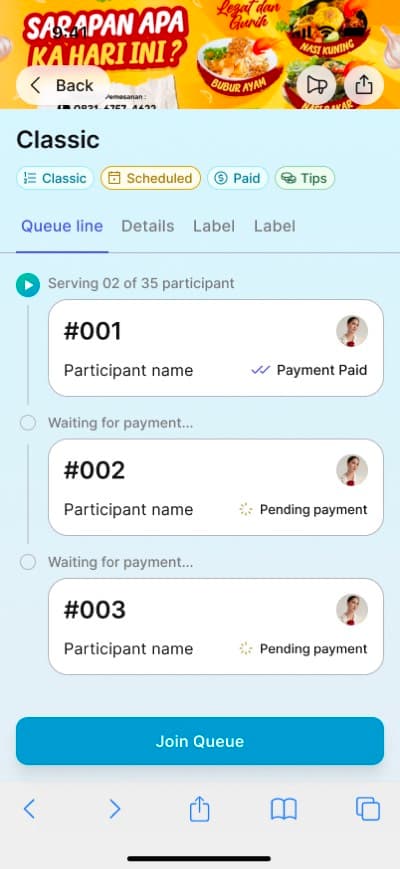
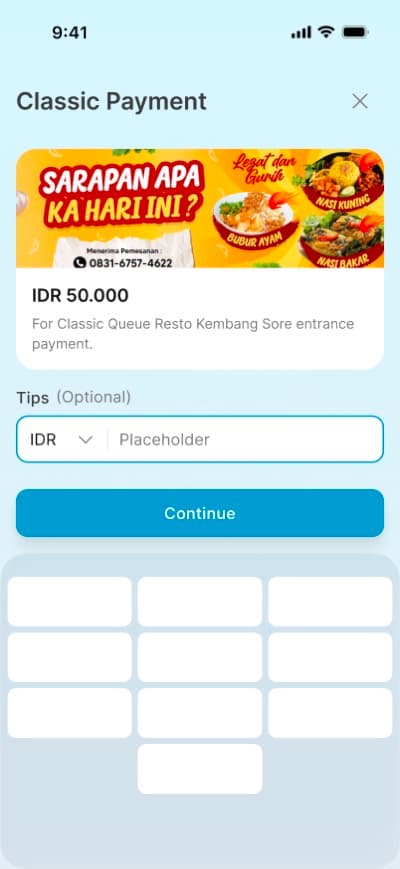
Joining works three ways, scanning a QR, opening a link or typing a queue ID, and always lands on the same queue line, so people see where they stand before they commit. Paid queues ask for payment right after joining, and unpaid spots stay pending.
Creators: set up by type, run it live
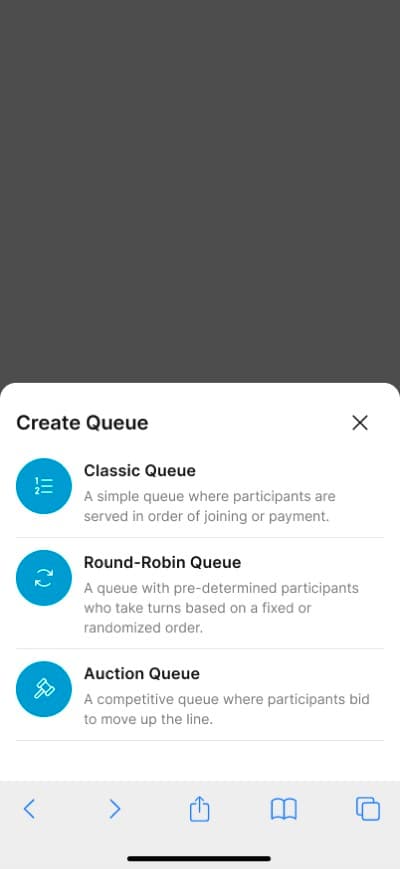
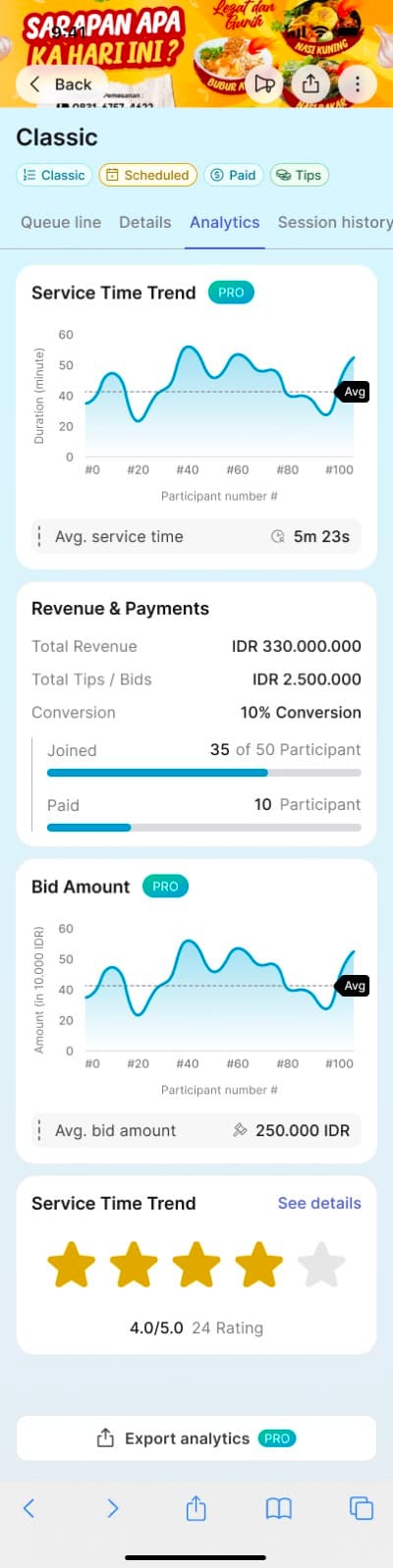
Creating starts with choosing the type, then one form that only shows what that type supports. Pro options stay visible but marked. Once live, Creators call next, skip, serve out of order, send announcements and track joins, payments and service time.
Monetisation
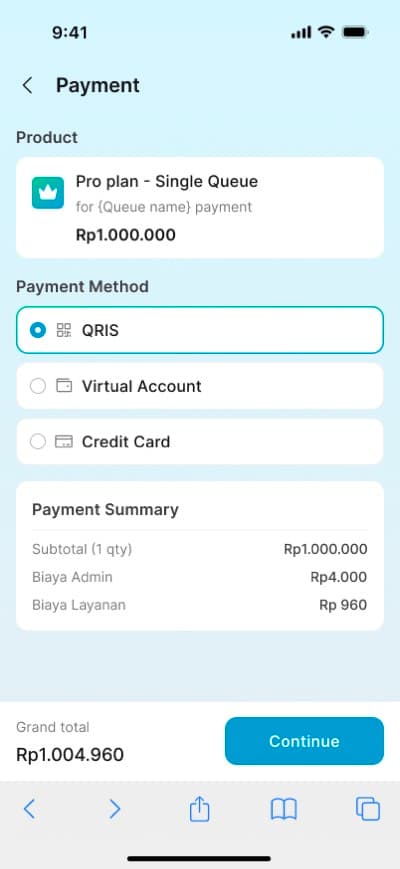
Rainflow earns from three streams, all running through one payment flow with QRIS, virtual account and card.
- Pro
Monthly or yearly plan
Unlimited queues with scheduling, automated messages, branding and data export.
- 1x
Single purchase
Unlocks Pro features for one queue.
- 2.5%
MDR
Taken on every transaction in a queue: prices, tips and winning bids.
- 100
Participants on Pro
Up from 20 per queue on the free plan.
What's next
v2.0, native mobile app
The same flows and components, rebuilt for iOS and Android with native push for turn reminders.
v3.0, API and webhooks
Let businesses plug Rainflow queues into their own booking, POS or CRM tools.
v4.0, business accounts
A B2B2C tier with enterprise features for businesses that run many queues at once.
The team
- Product DesignerAgip Arzaki Maulana
Next case study
04 / 04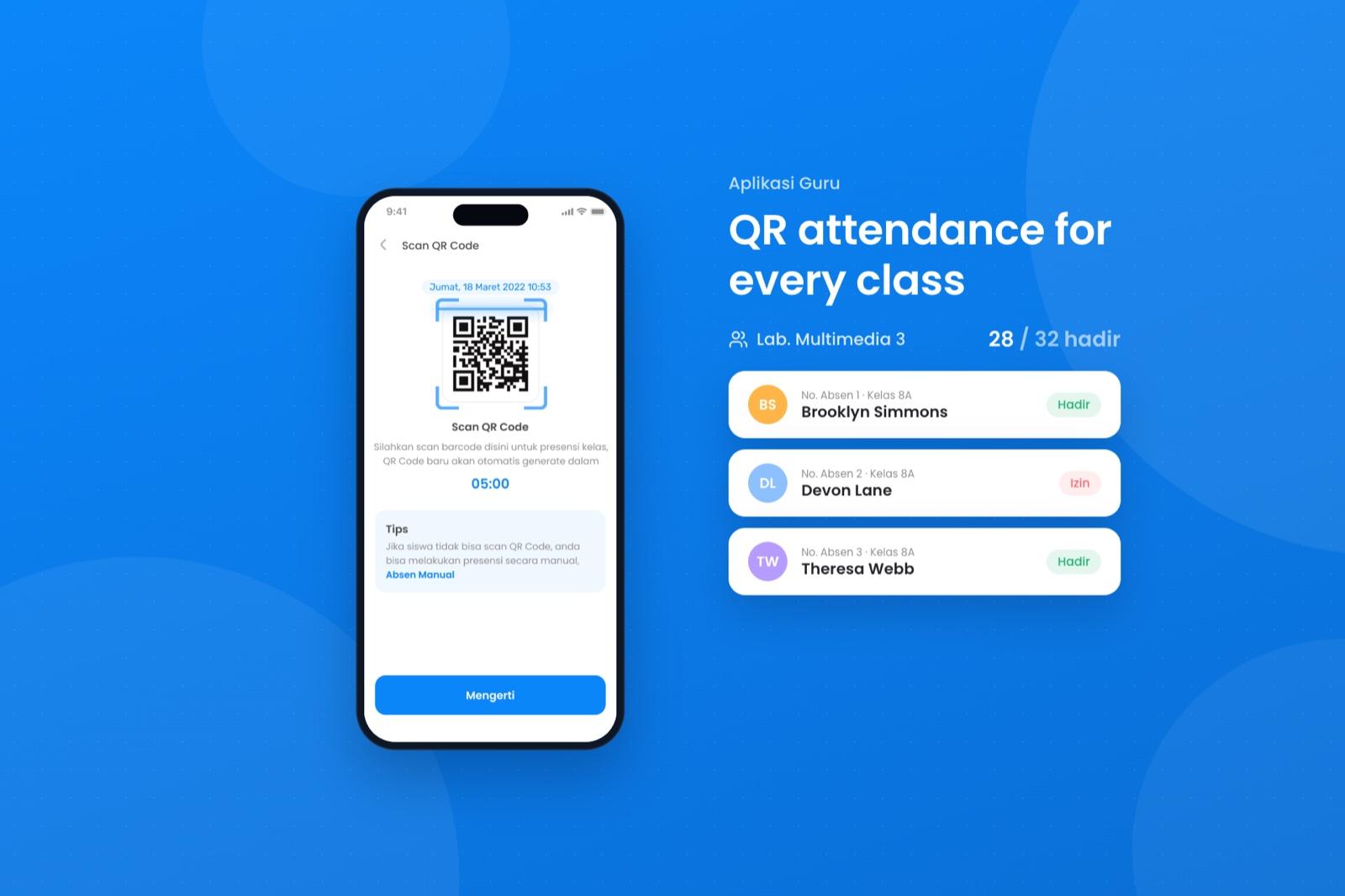
InStudi
A school attendance system for teachers, students and parents, with selfie check-in, live location and QR class attendance.